
Description
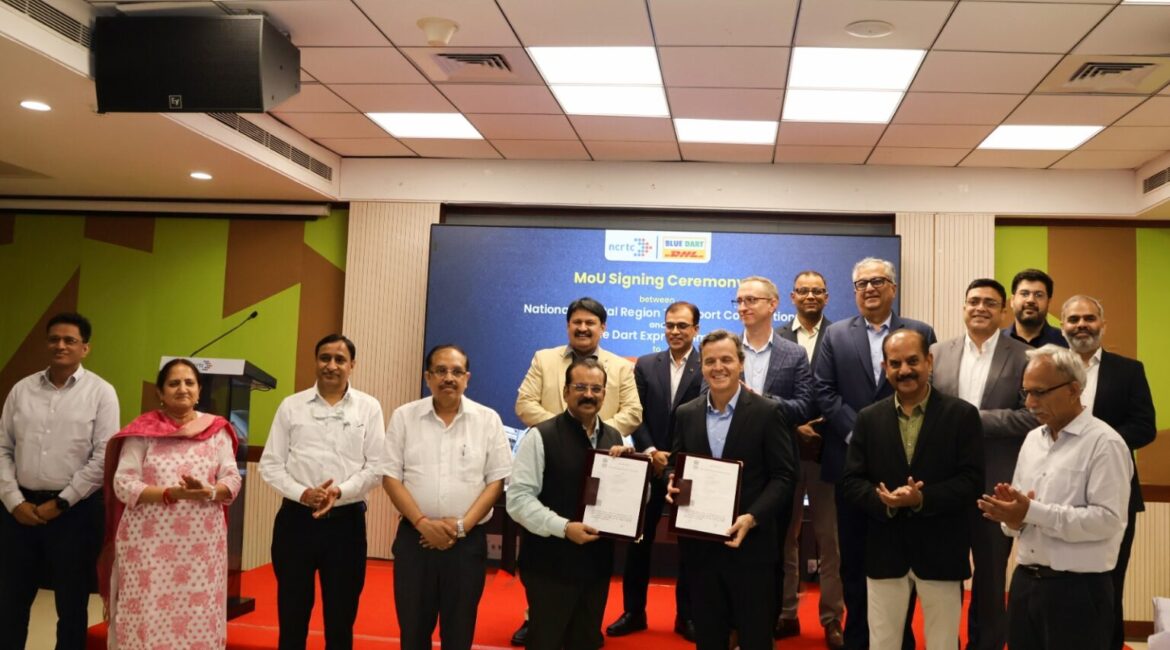
NCRTC and Blue Dart Express have signed an MoU to examine whether Namo Bharat services on the Delhi Meerut corridor can support express-parcel movement across the National Capital Region. The partners will study demand, operating needs and station facilities before deciding whether a sustainable urban cargo service is feasible locally.
Details
The Memorandum of Understanding between National Capital Region Transport Corporation and Blue Dart Express Limited opens a formal assessment of how regional rapid transit infrastructure could support selected urban cargo movements. The agreement concerns the Delhi Meerut Namo Bharat corridor. It is not an announcement of a parcel service. Rather, it gives both organisations a framework to examine whether the corridor can complement Blue Dart’s existing pickup and delivery network across the National Capital Region.
According to NCRTC, the assessment will consider operational requirements, expected parcel volumes, station facilities and related factors. These are essential questions for any logistics operation. Infrastructure may appear useful because of its location and capacity, but daily processes must also support secure handling, predictable transfers, appropriate timings and compatibility with passenger operations. The MoU is designed to study those practical questions before a decision is made about implementation.
The stated objective is to develop a sustainable logistics solution for urban cargo transport, including e-commerce consignments and other cargo, through efficient use of Namo Bharat infrastructure. This places the proposal within a broader discussion about using transport assets for more than one mobility need. Here, the central test is whether regional rapid transit can add value to parcel flows while preserving its principal responsibility to commuters.
NCRTC Managing Director Shalabh Goel said Namo Bharat is a strategic intervention intended to transform regional connectivity across the NCR and help reduce vehicular congestion and air pollution. He said the service has enabled access to jobs, education, healthcare and affordable housing. The Blue Dart collaboration, he added, creates an opportunity to explore how this new infrastructure could also serve the freight ecosystem while keeping public convenience at the centre.
For Blue Dart, the MoU creates a route to assess whether its delivery network can be supported by a rail-based movement option on the Delhi Meerut corridor. The release does not provide a timeline, operating plan, route pattern, commercial terms or launch date. That absence matters. The organisations remain at the feasibility stage, and any later model would depend on the joint findings on volumes, facilities and operating requirements.
The proposal is significant because e-commerce and other time-sensitive consignments must move reliably through congested metropolitan areas. At the same time, public transport agencies are increasingly considering how existing infrastructure can be used efficiently. The NCRTC Blue Dart study brings those questions together around an operating corridor, rather than a purely theoretical concept. Its scope will determine whether passenger transit and urban logistics can work together in this setting. It will also show whether lessons can apply across comparable rail and metro networks.
The next milestone is the joint assessment. If the partners find the concept operationally feasible, they may develop a more detailed plan. If not, the exercise will still clarify the constraints involved. For now, the news is limited but meaningful: NCRTC and Blue Dart have agreed to examine a potential sustainable urban cargo use of Namo Bharat infrastructure; express parcels are not yet being carried on its trains.
Conclusion
The agreement is a feasibility step, not a service launch. Its value will depend on whether NCRTC and Blue Dart can design a secure, reliable operating model that complements passengers and delivery networks. The outcome could inform how regional transit infrastructure is evaluated for future urban logistics use in India.
Source: National Capital Region Transport Corporation (NCRTC) | Official press release
Image source: National Capital Region Transport Corporation (NCRTC) official press release
